
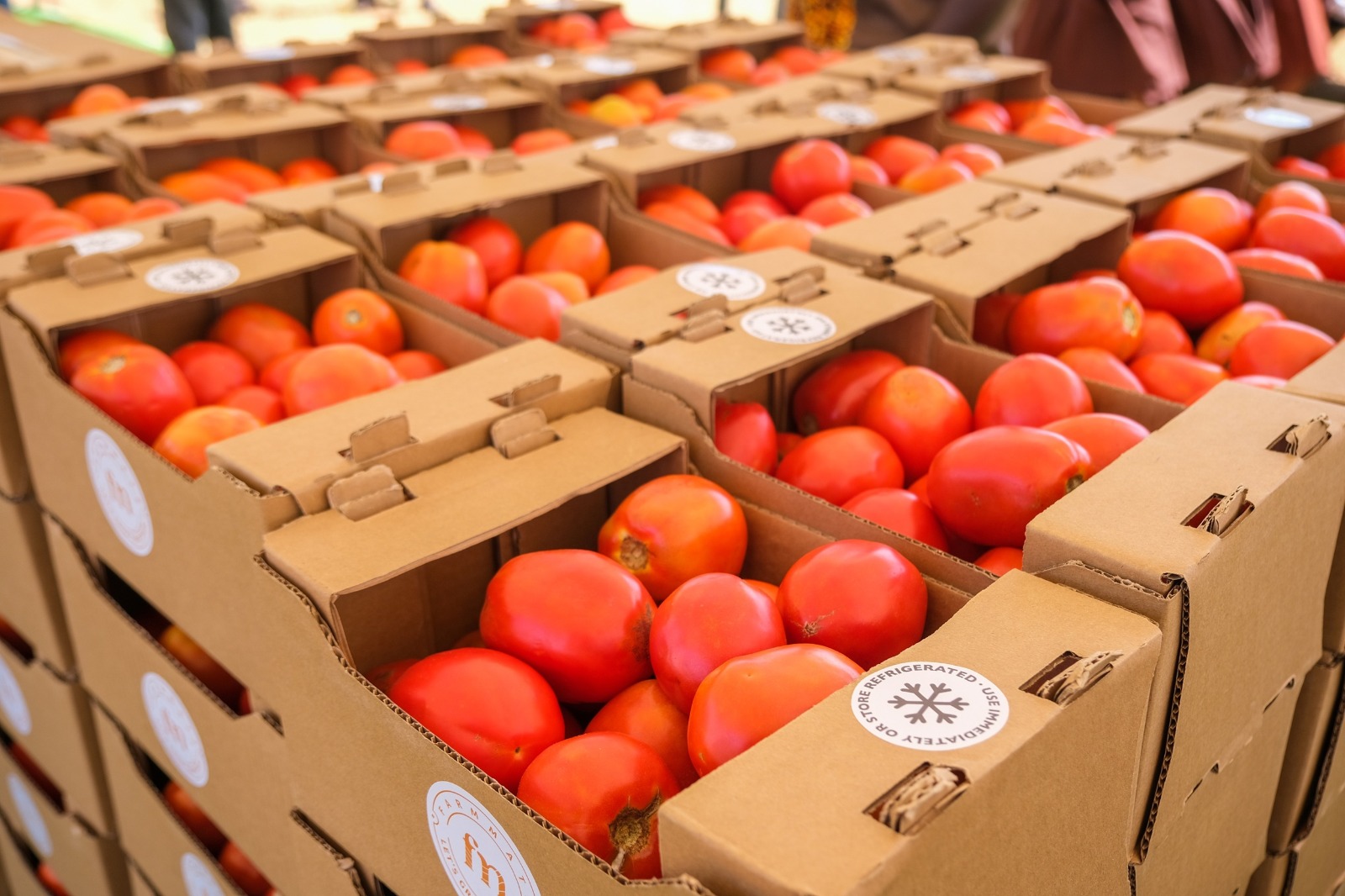
Ghana has launched a new initiative aimed at increasing local tomato production, reducing dependence on imported tomatoes and building a more reliable year-round supply for consumers.
The Ghana Tomato Self-Sufficiency Initiative (GHATSI), launched in Anloga in the Volta Region on September 15, is targeting national tomato production of about 400,000 tonnes annually as part of efforts to strengthen Ghana’s agricultural sector and improve food security.
The initiative is being implemented by the Ministry of Food and Agriculture (MoFA) in partnership with private-sector agricultural company FarmMate. The programme is expected to address challenges across the tomato value chain, including production, irrigation, financing, storage, processing, transportation and access to markets.
According to MoFA, a processing facility at the Legon Enclave is expected to begin operations in September 2026, with an initial processing capacity of between 1.5 and 5 tonnes per hour. Plans are also underway for additional semi-processing facilities in tomato-producing areas.
Processing could help address one of the industry’s longstanding problems: what happens to tomatoes when farmers produce more than the fresh market can absorb.
Turning surplus tomatoes into purée and other processed products could extend their shelf life while creating additional markets for farmers.
What GHATSI means for consumers
For consumers, the success of the initiative could have implications beyond agriculture.
Ghana’s tomato market has historically experienced periods of shortage and higher prices, particularly during seasons when local production falls.
A more consistent supply could potentially reduce some of the pressure created by seasonal shortages, although the effect on consumer prices will depend on production levels, market conditions, transportation costs, processing capacity and other factors.
The government’s broader objective is to move from a cycle in which Ghana experiences shortages at some times of the year and significant losses at others toward a more coordinated year-round tomato supply system.
The road ahead
GHATSI represents a significant attempt to address several challenges at once, from farm production and irrigation to finance, insurance, processing and market access.
But the programme’s progress will ultimately depend on what happens beyond the launch.
Farmers will need reliable access to water, quality seeds, technical support and markets. Buyers and processors will need consistent supplies. Storage and transportation systems will need to prevent produce from spoiling before it reaches consumers.
The government’s 400,000-tonne annual target therefore represents more than a production figure. It will require coordination across the entire tomato value chain.
As Ghana begins the first phase of the initiative, farmers, industry stakeholders and consumers will be watching closely to see whether the programme can translate its targets into increased production, lower losses and a more dependable supply of locally grown tomatoes.
Sources: Ministry of Food and Agriculture; Ghana News Agency; Citi Newsroom.
Ministry of Food and Agriculture report on GHATSI
Ghana News Agency report on the 400,000-tonne target



Leave a Reply