
Tag: Ghana

  • ISSER: Ghana Loses Over GH¢6.2 Billion a Year to Poor Sanitation

    ISSER: Ghana Loses Over GH¢6.2 Billion a Year to Poor Sanitation

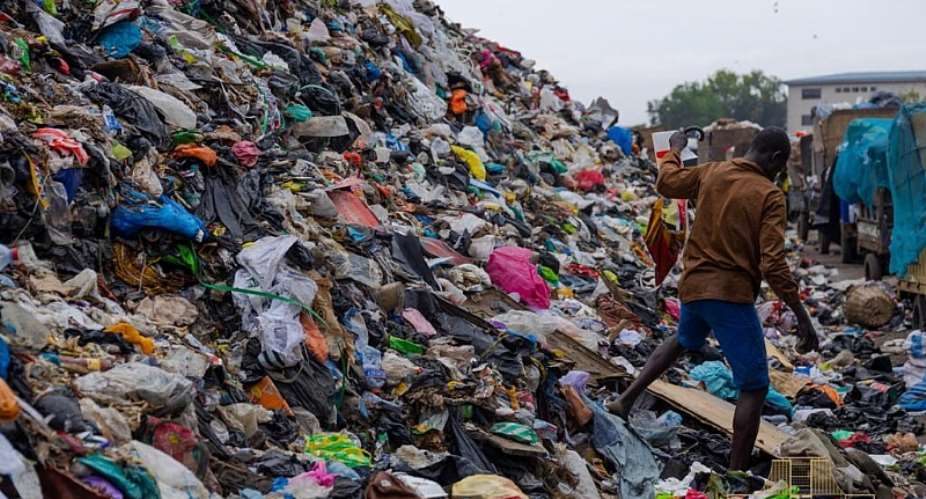
    Ghana is losing more than GH¢6.2 billion every year because of poor waste management and sanitation, according to a study by the Institute of Statistical, Social and Economic Research (ISSER) of the University of Ghana.

    The findings highlight the significant economic cost of inadequate sanitation, with the burden coming largely from healthcare expenses and productivity losses associated with sanitation-related diseases.

    The study indicates that Ghana spends approximately GH¢5.58 billion annually on direct medical costs, while another GH¢650 million is lost through reduced productivity.

    Together, these losses amount to more than GH¢6.2 billion every year.

    Millions of work and school days lost

    The economic impact also extends beyond direct financial costs.

    ISSER estimates that diseases associated with poor sanitation result in about 31.9 million lost work and school days every year.

    The illnesses identified include malaria, cholera and typhoid, among other preventable diseases linked to poor sanitation and inadequate waste management.

    The study also estimates that sanitation-related illnesses contribute to 107,222 premature deaths annually.

    MMDAs spend only GH¢180.2 million

    Despite the scale of the economic losses, the study found that Ghana’s Metropolitan, Municipal and District Assemblies (MMDAs) collectively spend only about GH¢180.2 million on waste management and sanitation.

    This creates a major imbalance between the money being spent to prevent sanitation problems and the much larger cost of dealing with their consequences.

    ISSER argues that sanitation should therefore be viewed not simply as a social or environmental responsibility but as an economic investment capable of generating substantial returns.

    Every GH¢1 invested can generate returns

    The study’s cost-benefit analysis indicates that the economic gains from increased investment in sanitation could be significant.

    Under the current spending situation, every GH¢1 invested in waste management is estimated to generate about GH¢180 in economic benefits.

    Under a more ambitious investment scenario, where spending is increased to approximately GH¢1,028 per tonne of waste, the return could rise to about GH¢556 for every GH¢1 invested.

    The researchers say the potential gains would come from lower healthcare costs, fewer deaths and improved productivity.

    Urban growth putting pressure on sanitation systems

    ISSER also points to rapid urbanisation, population growth and changing consumption patterns as factors contributing to Ghana’s growing waste-management challenge.

    Many local authorities are struggling to keep pace with the increasing volume of solid and liquid waste being generated.

    The consequences, according to the researchers, go beyond overflowing waste sites and unclean surroundings. Poor sanitation also affects public health, productivity and the wider economy.

    ISSER calls for increased investment

    The researchers are calling for increased government investment in sanitation infrastructure, drainage systems, waste collection and environmental health services.

    They recommend that resources be directed towards areas where sanitation problems pose the greatest health risks, including densely populated communities, flood-prone neighbourhoods and underserved urban and peri-urban areas.

    ISSER also recommends improved management of faecal sludge and action to eliminate open refuse dumps that contribute to the spread of disease.

    The researchers argue that investing more in sanitation could reduce preventable illnesses, save lives and improve productivity while creating broader economic benefits for the country.

    Sanitation as an economic priority

    The findings put a financial value on a problem that is often treated mainly as an environmental or public-health concern.

    With more than GH¢6.2 billion lost annually, ISSER’s research suggests that the cost of maintaining the current approach may be considerably higher than the cost of investing in better sanitation systems.

    For Ghana, the challenge is therefore not only about keeping communities clean but also about reducing avoidable healthcare expenditure, protecting productivity and preventing deaths linked to inadequate sanitation.
    Sources
    Citi Newsroom — Ghana loses over GH¢6.2bn annually to poor sanitation – ISSER
    ModernGhana — Poor sanitation costs Ghana over GH¢6.2 billion every year — ISSER Report

  • Ghana Sets New Cocoa Producer Price at GH¢42,400 for 2026/27 Season

    Ghana Sets New Cocoa Producer Price at GH¢42,400 for 2026/27 Season

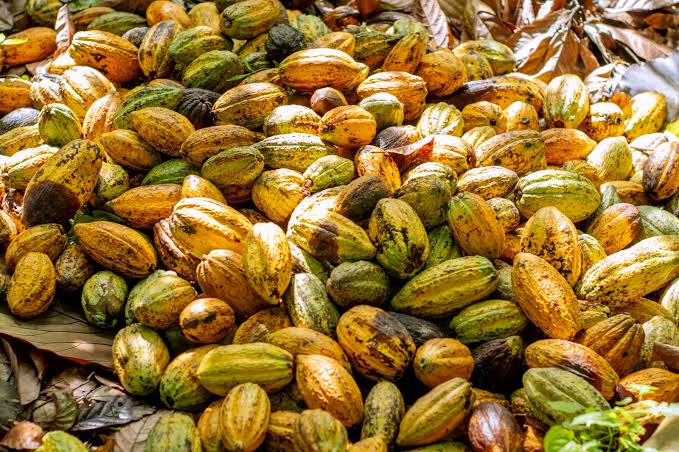
    Ghana has opened the 2026/27 cocoa season with a new producer price of GH¢42,400 per tonne, representing an increase of GH¢1,008 from the GH¢41,392 per tonne paid during the 2025/26 season.

    The revised price took effect on Friday, September 25, 2026, as the new cocoa season officially opened.

    The new rate means cocoa farmers will receive GH¢2,650 for a 64-kilogramme bag, compared with GH¢2,587 under the previous producer price.

    New pricing framework

    According to the Ghana Cocoa Board (COCOBOD), the GH¢42,400 producer price represents 71.18 per cent of the realised gross Free-On-Board (FOB) value of cocoa.

    The pricing decision follows consultations involving key stakeholders in the cocoa industry and comes under reforms introduced through the Ghana Cocoa Board Act, 2026 (Act 1182).

    The new law provides that cocoa farmers should receive a minimum of 70 per cent of the realised gross FOB price of cocoa.

    COCOBOD says the reforms are intended to strengthen the financial and institutional sustainability of Ghana’s cocoa sector while improving returns to farmers.

    Support for cocoa farmers

    Beyond the producer price, COCOBOD says government will continue productivity programmes designed to reduce the cost of production and improve farm yields.

    These include the provision of free fertiliser, free hybrid cocoa seedlings and the Cocoa Disease and Pest Control Programme, according to the Board’s announcement.

    COCOBOD also expects the revised producer price to contribute to efforts to reduce cocoa smuggling by making official channels more attractive to farmers and other actors within the supply chain.

    Traceability and export requirements

    The new cocoa season is also beginning with Ghana’s cocoa traceability system fully deployed across cocoa-growing areas, according to COCOBOD.

    The Board says the Ghana Cocoa Traceability System (GCTS) is intended to support compliance with the European Union’s Deforestation Regulation, which is expected to take effect on December 30, 2026.

    COCOBOD says the system will help Ghana supply cocoa to the European Union market that can be traced through the supply chain and verified as deforestation-free and legally produced.

    What the new price means for farmers

    The increase of GH¢1,008 per tonne amounts to an increase of about 2.4 per cent compared with the previous producer price.

    While the adjustment raises the amount farmers receive for their cocoa, the new season also comes as Ghana undertakes broader reforms covering cocoa pricing, financing and management.

    COCOBOD has separately announced plans for a domestic cocoa financing programme, through which Cocoa Capital PLC intends to raise up to GH¢16.3 billion to finance cocoa purchases for the 2026/27 season and refinance existing obligations.

    The 2026/27 cocoa season therefore begins amid changes intended to reshape how Ghana finances, prices and manages one of the country’s most important agricultural commodities.

    Source: Ghana Cocoa Board (COCOBOD), Review of the Producer Price of Cocoa for the 2026/27 Cocoa Season, September 25, 2026.

  • Black Stars Open AFCON 2027 Qualifiers With 2-0 Defeat to Côte d’Ivoire

    Black Stars Open AFCON 2027 Qualifiers With 2-0 Defeat to Côte d’Ivoire

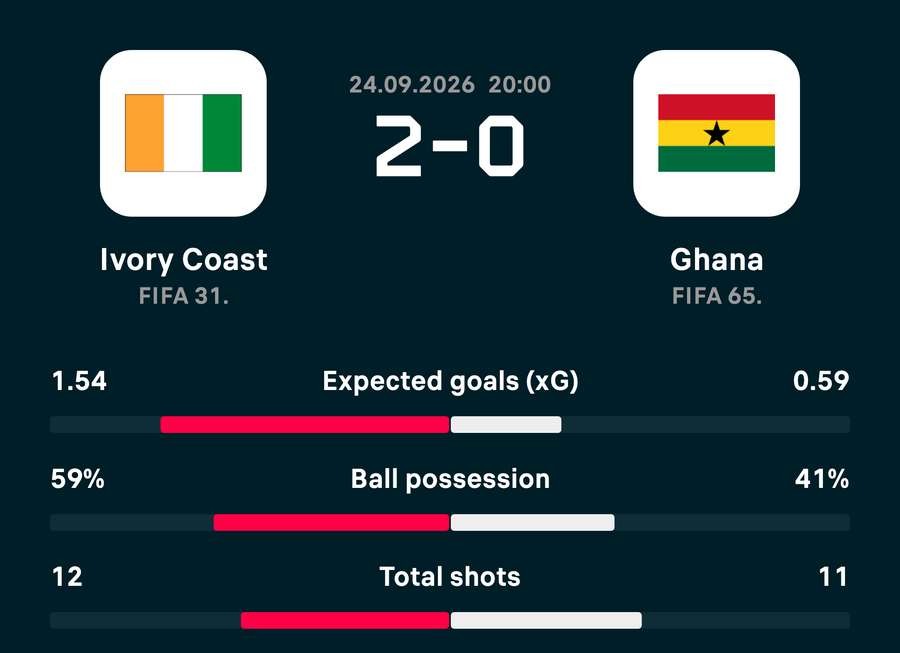
    Ghana’s Black Stars began their 2027 Africa Cup of Nations qualifying campaign with a 2-0 defeat to Côte d’Ivoire in Bouaké on Thursday night.

    The Group C encounter at the Stade de la Paix remained goalless for much of the first half before Côte d’Ivoire broke the deadlock shortly before the interval.

    Malick Yalcouyé found space on the edge of Ghana’s penalty area and fired past goalkeeper Lawrence Ati-Zigi to give the hosts a 1-0 lead.

    Ghana returned after the break looking for an equaliser, but their task became more difficult when Côte d’Ivoire were awarded a penalty following a foul involving Abdul Fatawu Issahaku and Yalcouyé.

    Captain Franck Kessié stepped up and converted the spot-kick to double the hosts’ advantage.

    Ghana search for a way back

    With the Black Stars trailing by two goals, head coach Carlos Queiroz made attacking changes as Ghana attempted to get back into the contest.

    Felix Afena-Gyan, Augustine Boakye and Benjamin Tetteh were introduced as Ghana pushed forward in search of a response.

    The Black Stars’ best opportunity came in the second half when Caleb Yirenkyi tested Côte d’Ivoire goalkeeper Yahia Fofana from inside the box, but the goalkeeper made the save to preserve the home side’s two-goal lead.

    According to analysis published by Citi Sports, Ghana did not register a shot on target until the 75th minute. The publication also highlighted difficulties in connecting midfield with attack and creating clear opportunities in the final third.

    Queiroz defends his team

    Despite the defeat, Carlos Queiroz said he was proud of the response from his players.

    Speaking after the match, the Ghana coach praised the team’s effort following the difficult moments in the game. 3News reported that Queiroz said the Black Stars showed a positive response despite eventually losing the match.

    The coach also questioned the penalty decision that led to Côte d’Ivoire’s second goal. 3News reported that Queiroz described the decision as controversial.

    Ghana now turn attention to The Gambia

    The defeat leaves Ghana without a point from their opening Group C fixture.

    The Black Stars will now return home for their next qualifier against The Gambia at the Accra Sports Stadium on Tuesday, September 29.

    The match will give Ghana an immediate opportunity to respond after the setback in Côte d’Ivoire.

    For Queiroz and his players, attention will now shift toward improving their attacking output and securing points on home soil as the qualification campaign continues.

    The opening defeat means Ghana will be looking to make a strong response in Accra when The Gambia arrive for the second Group C fixture.

    MBOS Sports Desk

    Sources: Ghana Football Association, 3News, Citi Sports and Al Jazeera.

    Source links:
    Ghana Football Association match report
    3News: Queiroz backs Ghana after defeat
    Citi Sports match analysis
    Al Jazeera match report